

What is good sound quality?
In the sound industry, audio and music lovers, sound quality is a word that almost a day and night hanging in the mouth. What is the sound quality? Like many everyday concepts, we rarely think about it, rarely dwell on it. As the name implies, or read the literal meaning, the quality of sound is the quality of sound. But what is the quality of sound? How is the quality of the sound represented, measured and evaluated? Is there an objective, agreed-upon standard?
The understanding of the human voice is even more subtle. We can tell strangers from acquaintances, and we can even "hear the sound of people we know" when we have never met them. The sound of footsteps, a door opening, and a cough can tell exactly when someone you know is coming. The auditory impression corresponding to this distinction is called timbre. Various sounds have their own characteristics, and sound has a mysterious color that cannot be seen or touched. The understanding of the human voice is even more subtle. We can tell strangers from acquaintances, and we can even "hear the sound of people we know" when we have never met them. The sound of footsteps, a door opening, and a cough can tell exactly when someone you know is coming. The auditory impression corresponding to this distinction is called timbre. Various sounds have their own characteristics, and sound has a mysterious color that cannot be seen or touched.
The reason why there are different timbre, from the composition, is because each sound composition is different. It will have a lot of harmonics and noise; These harmonics and noise may have a certain law, also may not have a certain law. From the time structure is its shape, the relationship between the diaphragm and time is also different. This combination is infinite. And good loudspeaker wants the timbre characteristic of music itself namely, not distortion.
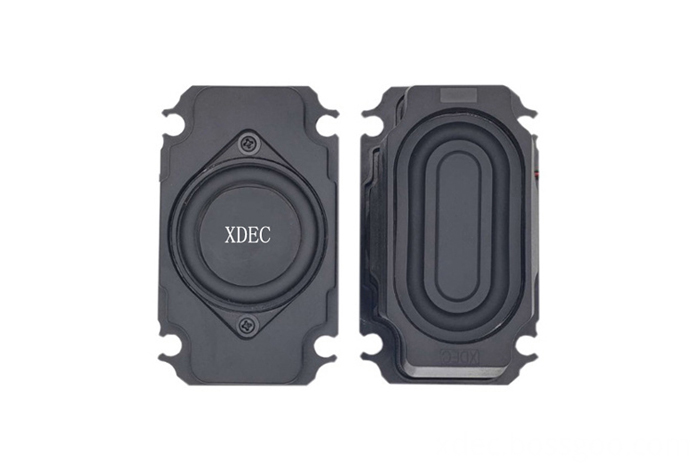
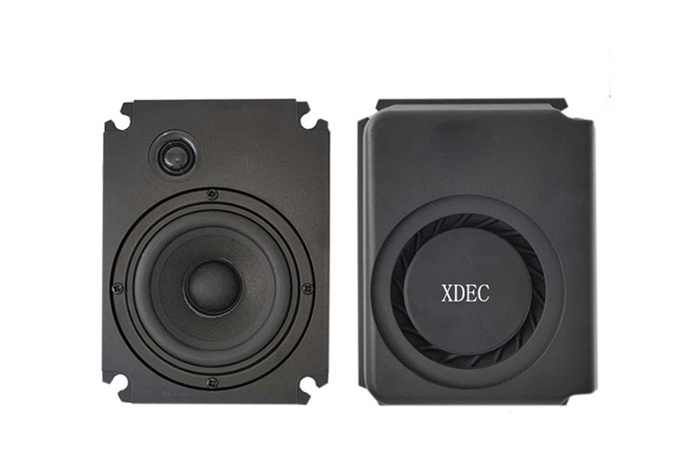
In short, the sound quality of loudspeaker replay mainly depends on the diaphragm material. As far as XDEC electric loudspeaker is concerned, its objective test indexes mainly depend on its structure and geometric shape. And its sound quality depends on the loudspeaker diaphragm material, the type of diaphragm material and its physical properties.
According to the study, the sound quality of loudspeaker diaphragm depends on three indicators of the material of the diaphragm: they are the elasticity of the diaphragm material (with elastic modulus E), density (P) and appropriate internal damping. That is, you want it to have a high modulus of elasticity, a low density p, and an adequate internal damping. In this way the speaker propagates fast, rises fast, and has the appropriate internal damping, damping off unnecessary clutter, vibration stops falling fast, the sound is clean and soft. But no man is perfect. There is no absolutely ideal diaphragm material in the world. For example, steel alloy diaphragm has high elastic modulus, small density, fast response to vibration and strong explosive force to sound. But the metal damping is small, it is difficult to stop the vibration quickly, the sound is not clean. On the contrary to the pulp materials, the sound is soft, the sound is also slow, but the speed of decline is fast, and the strength is not very strong. It is very difficult to satisfy materials with large E/ P and sufficient internal damping simultaneously. In recent years, with the development of material technology, many new materials have appeared. For example, some conical diaphragm in addition to the use of traditional pulp, glass fiber, Kevlar fiber (bulletproof cloth), and the use of TPX, HD-A, HD-1 and other composite materials, the performance has been greatly improved.XDEC useing different diaphragm to work to reduce distortion and maintain good sound quality.