

The word "clear" or "fuzzy" is often used when evaluating sound. What is clarity and what is blur? We can easily find similar examples in image processing.

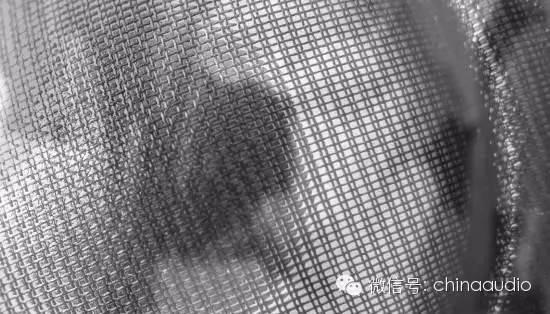
This is a macro photo of a speaker's tweeter diaphragm. This is a pretty clear picture. Just as different cameras show the same things and get different effects, different speakers show the same original signal and get different effects.

And this is a rather blurry image. There are many reasons why the image is blurred. This is just one of them. This kind of blur is caused by the mutual infiltration of adjacent pixels. When the loudspeaker diaphragm vibrates, due to the material or shape of the diaphragm, the overlapping of the waveforms at adjacent time points leads to blur. In a popular saying, "a wave of unsettled waves rises again". This ambiguity is inevitable, but the degree is endless. The performance is more obvious on the woofer. Many speakers simply cannot show the details of the low frequency. Some people often describe the bass as muddy, that is, the bass clarity is not enough. This deepening of the blur may also be caused by the phase-inversion structure, or positioning problems, the reflected or phase-inverted signal and the current signal of the speaker will also form a time difference, causing the waveform to be diffracted and blurred. Most of the time, the closed structure of the speaker is cleaner than the bass of the inverter box
When the non-vector image is partially enlarged, the sharpness will decrease, just like the picture above. In the process of sound processing, there are also many amplification processes, such as pre-amplification and post-amplification. Multiple amplifications will also make the signal blurred.

You can also get different effects by zooming in. This one is obviously clearer than the previous one. The sound amplification process also has quality differences. Using different operational amplifiers, the clarity obtained is different, and different power amplification ICs can also be used to obtain different sound quality.
When the image is mixed with noise, it will also become blurred. These noises will interfere with the color value of the original pixel, resulting in blur. In the sound performance, similar blur effects are the most, such as the resonance of the cabinet. The noise generated by the box resonance and the sound from the speaker overlap, which will cause the sound to become blurred. At this time, you need to install ribs or place heavy objects on the box to reduce the resonance. In some listening environments, when the sound is a little louder, you can still hear the closet and CD box vibrating. The interference effect caused by these vibrations is similar to the noise in the picture above. You need to make sure that these things do not appear in the listening as much as possible. Sound environment. There are also some noises that do not come from resonance or resonance, but from the electrical part. All power amplifiers will have hum, but the magnitude of the hum is different, and the hum will also destroy the accuracy of the sound signal. .

Appropriately increasing the brightness of the light-colored areas of the image can obtain a stronger contrast, and the image's ability to describe contours can be improved. The same is true in sound processing. Appropriately increasing the brightness of high-frequency signals can make the sound sound clearer. Excessive increase in brightness will result in loss of detail.
XDEC speaker is a professional speaker manufacturer which specialized on design, produce, and sale speaker driver to the world, our speaker driver can be design well by experience engineer, delivery good sound quality, produce a clear and loud sound for clients.ensure a good sound playback, welcome contact us for more good quality clear sound speaker.
To get a clearer playback effect, you need to start from many aspects, upgrade the playback equipment, upgrade the audio source, upgrade the amplifier, and upgrade the speakers. This is a way of no return. Be careful. We advocate improving the listening environment to improve sound clarity, reduce echo and resonance, and often upgrade the system without spending money. Don't easily increase the brightness of the sound to get clarity, it actually comes at the cost of losing some details. Clarity is often expressed in terms of analytical power. In fact, clarity should not be the first goal. When clarity reaches a certain level, the more important thing is timbre.